Archive

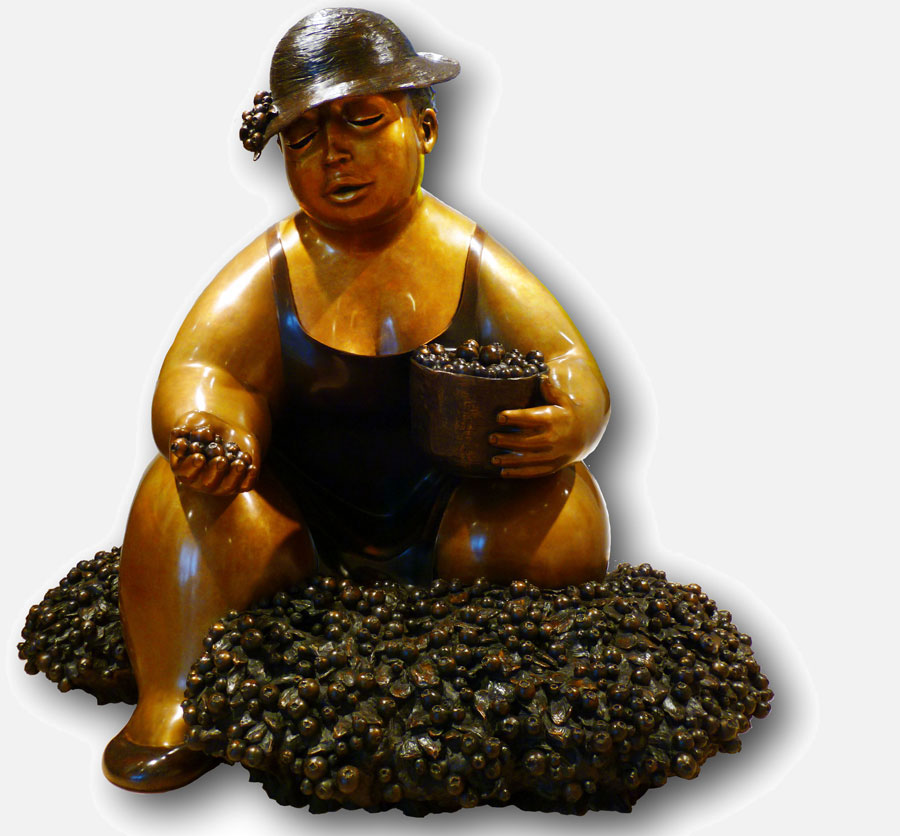
BELANGER, rose-aimée

Born 1923 in Guérin, QC., She began her artistic formation at ‘L’École Des Beaux-arts de Montréal’ in 1945. However, even though she always practiced art work, it was not until thirty years after, and eight children later that she finally began to sculpt and create full time. Rose-Aimée Belanger’s principal inspiration comes from the simple moments of every day life and the happy surprises one can observe. The female forms, or Bélanger’s “rounds” as she likes to call them, are the vehicle for her visualizing emotions. All these expressions are essential and can only come from her “rounds”. The emotions are amplified by the sensuality of the subtle curves and the heat from the bronze patina. There is a serenity surrounding Bélanger’s “rounds”; they breathe calmness allowing one to do the same in their presence. in 1997, the sculpture ”Les Chuchoteuses” by Rose-Aimée Bélanger was installed across the street from gallery Saint-Dizier on Saint-Paul Street West and has been a great success with the public ever since. Rose-Aimée Bélanger sculptures are collected world wide both privately and publicly.

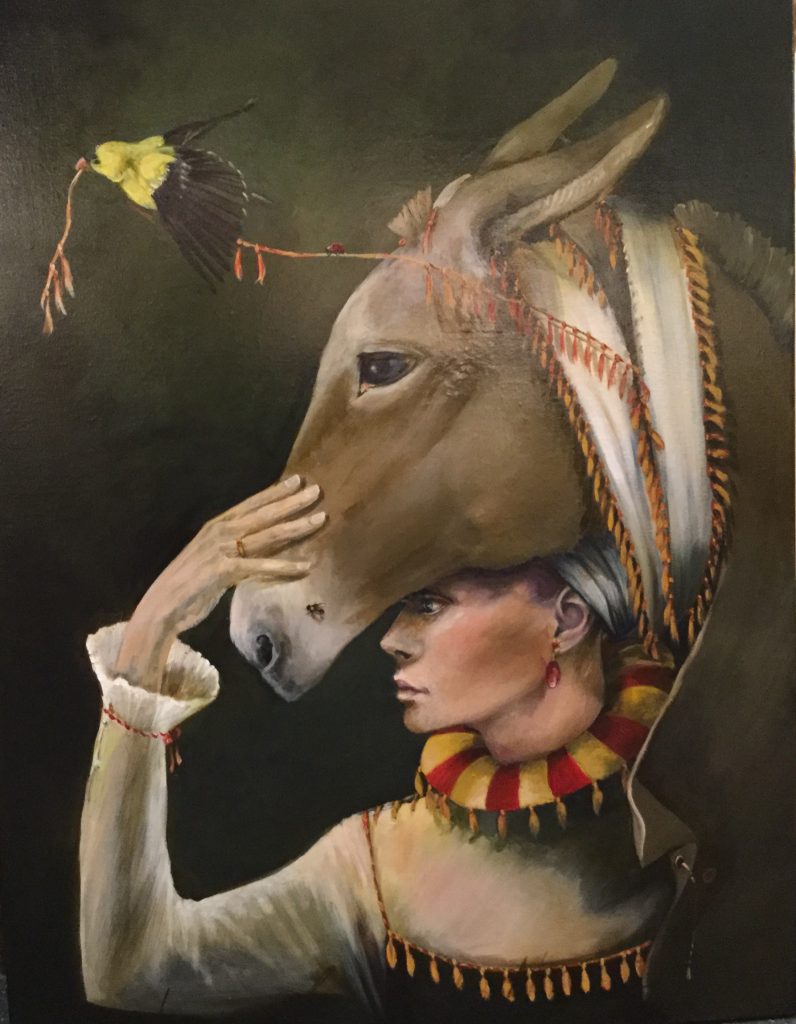
BELLEROSE, patricia

Patricia Bellerose was born in 1980 in Joliette, Quebec. Her family always encouraged her to draw, do watercolors and other painting mediums. She graduated in graphic design in 2000 and work in that field for a very short period. In 2006 she started acrylic painting and then move to oil painting in 2008. Her first gallery representation started in 2011. Her artwork has been rewarded in numerous international painting contests. Lately she received an award of excellence for the 2014 OPA eastern regional Exhibition and 2014, 3rd Place Overall award April/May PleinAir Salon competition. She is a member of Oil painter of America (OPA) and Portrait Society of America (PSA).

LEMIEUX, clément

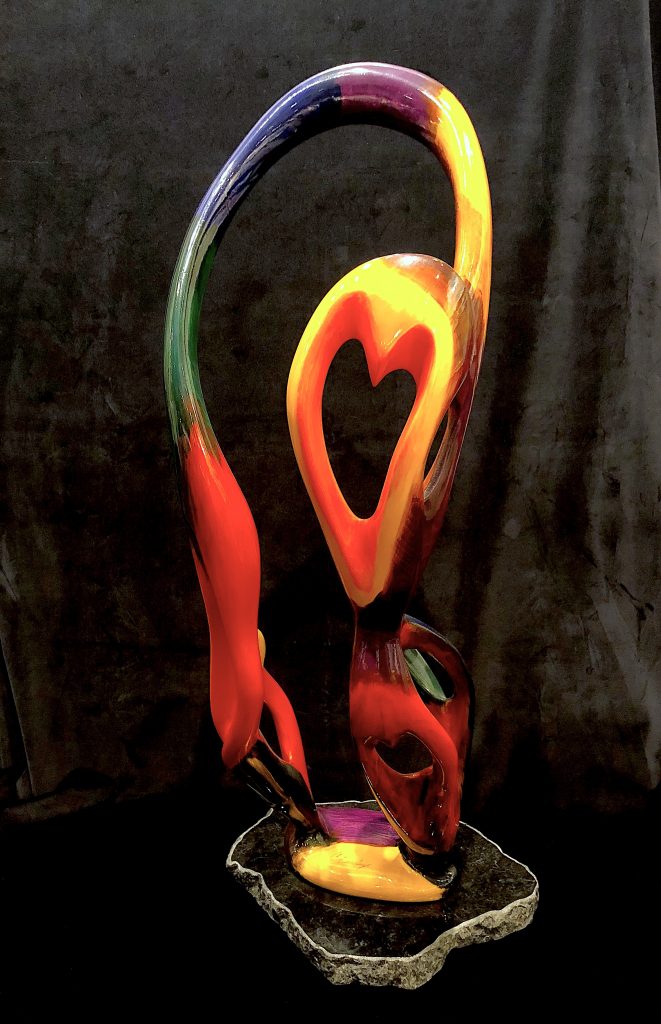
Clement Lemieux, was born in 1946, in Lévis. He hold a black belt in judo, and created his school in the basement of his own house, where he met his future wife. They decided to start a family. As the family grew, Clement showed an interest in wood and making furniture for everybody, especially his family. He gave up carpentry to study sculpture lessons and to perfect his skills. He closed his Judo school to become a full time artist, and father of 12. While continuing to sculpt he developed a talent for abstract painting where colors has no secret for him. Clement Lemieux is a true example of a Canadian artist where the beginnings have not always been easy, but he has shown that it is never too late to develop a passion for art.

DALI, salvador

Salvador Domingo Felipe Jacinto Dalí i Domènech, Marqués de Dalí de Pubol (11 May 1904 – 23 January 1989), known as Salvador Dalí , was a prominent Spanish surrealist painter born in Figueres, Catalonia, Spain.

Dalí was a skilled draftsman, best known for the striking and bizarre images in his surrealist work. His painterly skills are often attributed to the influence of Renaissance masters. His best-known work, The Persistence of Memory, was completed in August 1931. Dalí’s expansive artistic repertoire included film, sculpture, and photography, in collaboration with a range of artists in a variety of media.

Dalí attributed his “love of everything that is gilded and excessive, my passion for luxury and my love of oriental clothes”to an “Arab lineage”, claiming that his ancestors were descended from the Moors.

Dalí was highly imaginative, and also enjoyed indulging in unusual and grandiose behavior. His eccentric manner and attention-grabbing public actions sometimes drew more attention than his artwork, to the dismay of those who held his work in high esteem, and to the irritation of his critics.

Complete biography:
https://en.m.wikipedia.org/wiki/Salvador_Dal%C3%AD

POLSON, frank

Bio – Frank Polson
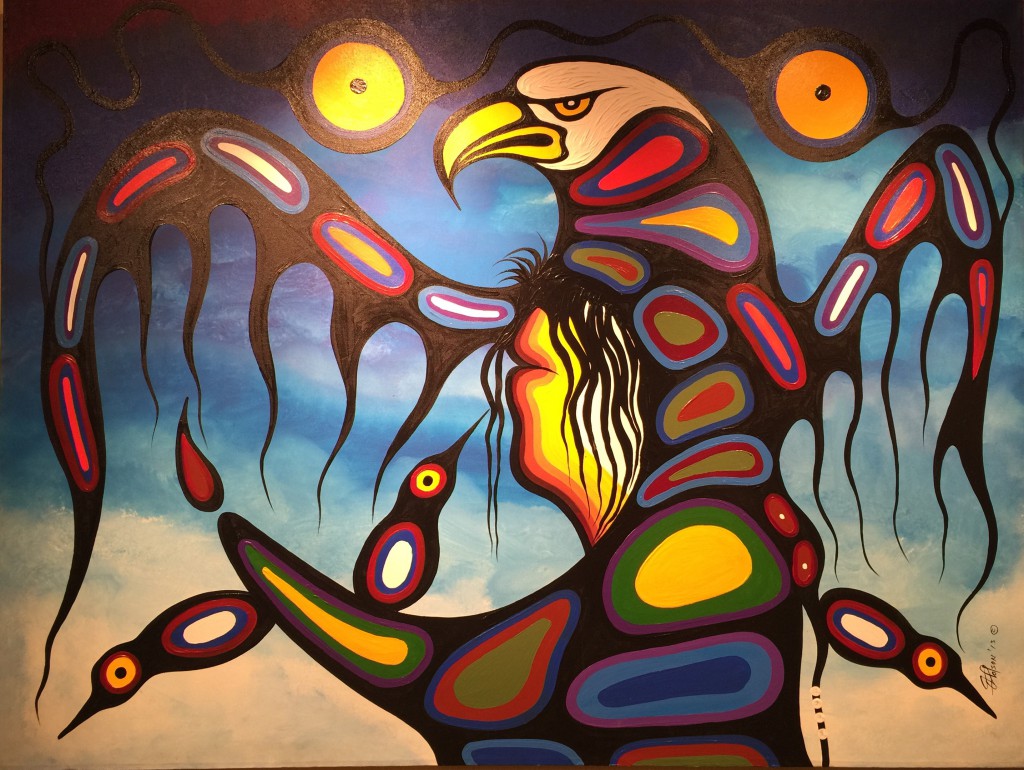
“Painting makes me feel like I’m doing something for myself,” says Algonquin artist Frank Polson

From an early age art soon became his refuge, taking comfort in drawing the beaver and moose he saw along the shore when his father Walter took him out on his trap line.

Frank says most of his life was about “partying, not painting.” He dropped out of high school, an art course at Northern College in Timmins, and two relationships that produced five children.

It wasn’t until he served 38 months in federal prison in Kingston that his art began to put him on the road to independence. “I met one inmate who was an artist – Steve Toulouse – from Wiky I believe. He told me all you have to do is believe in yourself.”

Inspired by a library book on Norval Morrisseau, Frank began to create pictures, at first using house paint from the prison woodwork shop and discarded jean jackets and torn bed sheets for canvas. Prison visitors began buying his work, and during a day-pass he arranged for his first exhibition at the Thomas B. Maracle Gallery on Tyendinaga Mohawk Territory, where four works sold.

An estimated 2500 paintings later, Frank has survived a substance abuse relapse, another jail term, and a heart attack. But today he is sober and maintaining contact with his children and seven grandchildren.

He is also a self-taught carver.

“The only medium I haven’t used is oil,” he smiles. “I can’t wait that long for paint to dry!”

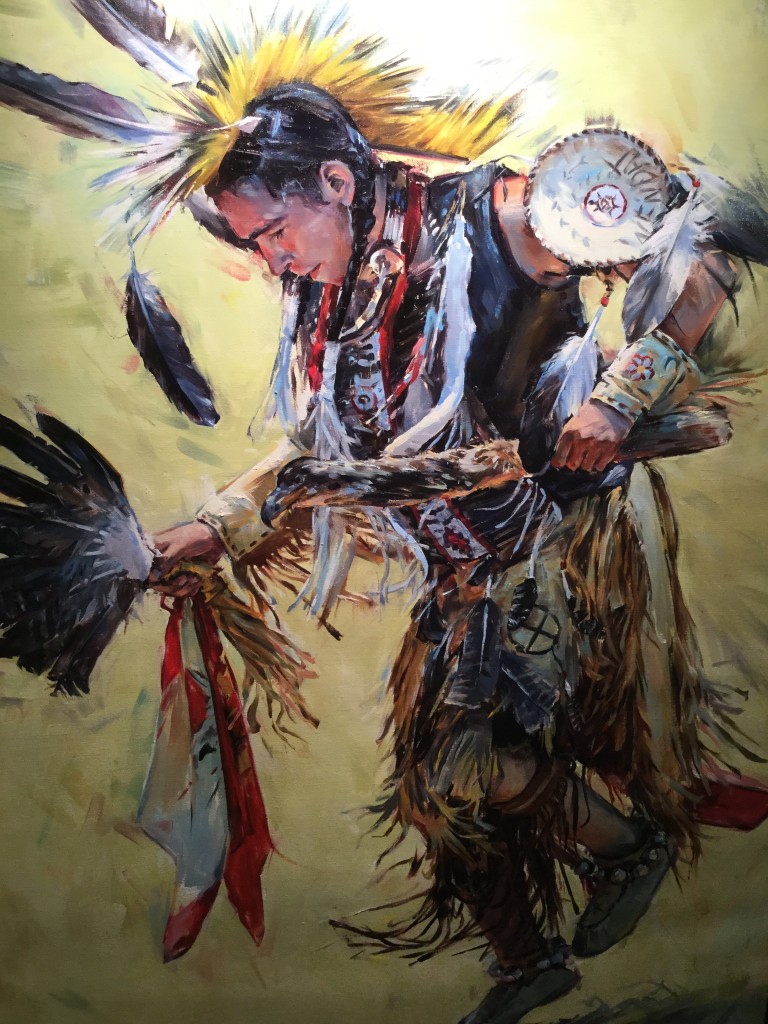
Within hours of moving to North Bay in April he was out looking for customers and producing and selling larger, brighter and more detailed canvases than ever before, including Traditional Circle dancer, the cover image for Pow-wow guide.

magazine covercomp

“I don’t even think about retirement,” he says. “I want to do a travelling exhibit about how alcohol and drugs have been so destructive to our people.”

A video with some of the history of Frank Polson can be found here;

http://vimeo.com/12702698

RIOPELLE, jean-paul

RIOPELLE jean-paul
(1923 – 2002)
Jean Paul Riopelle, peintre, sculpteur et graveur, s’est formé auprès de deux maîtres complètement différents: Henri Bisson, peintre académique pour qui même l’impressionnisme était un peu outré, et Paul-Émile BORDUAS qui se voulait à la pointe de l’avant-garde et surréaliste. Ce dernier finira par l’emporter et Riopelle se joindra au groupe des AUTOMATISTES, exposera à Montréal avec eux, en 1946 et en 1947, et signera le manifeste du REFUS GLOBAL, en 1948.

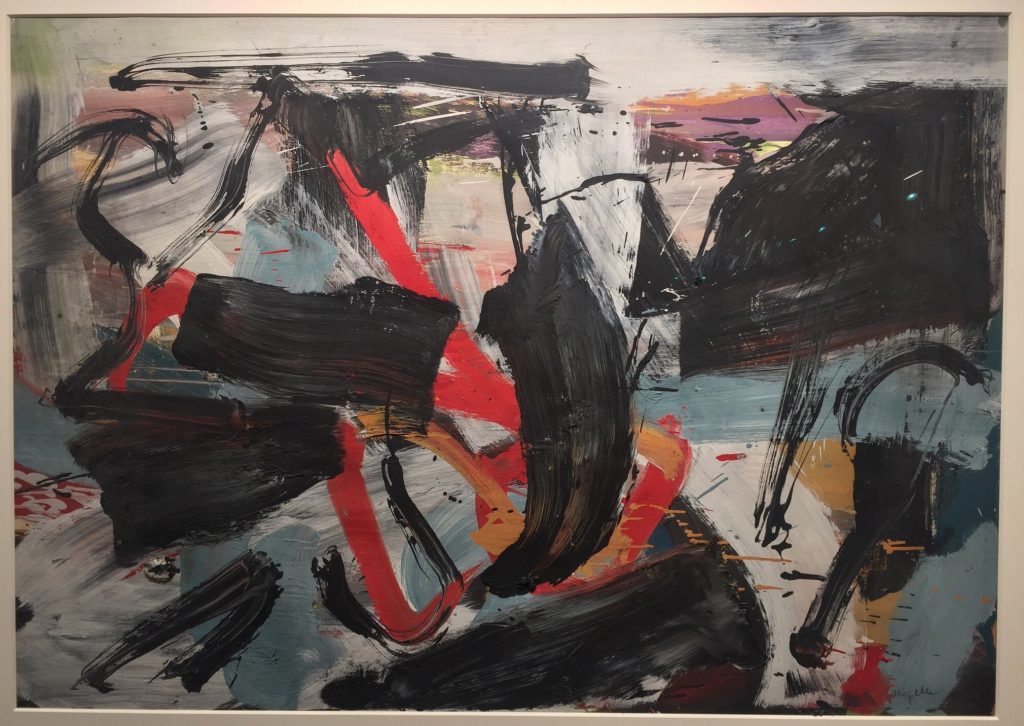
Mais déjà le coeur de Riopelle est à Paris, où il finit par s’installer. C’est là qu’il trouve sa voie, ce qu’il appelle le hasard contrôlé. Il s’associe brièvement avec les surréalistes à Paris. Il est le seul Canadien à exposer avec eux en 1947. Mais il a finalement plus d’affinités avec le groupe dit d’abstraction lyrique. Les années 50 sont celles de sa consécration à Paris (le critique Georges Duthuit s’intéresse à son travail) et en Amérique (Biennale de São Paulo en 1951 et 1955; Younger European Painters au Guggenheim en 1953; Exposition internationale de Pittsburgh en 1958 et 1961). C’est aussi la période de ses « grandes mosaïques », tableaux peints à la spatule, faits d’éléments multicolores juxtaposés de façon telle qu’ils rappellent un paysage vu des airs.

Avec les années 60, Riopelle diversifie ses moyens d’expression, touchant autant l’encre sur papier, l’aquarelle, la lithographie, le collage que l’huile. Sa peinture prend aussi plus de risques, comme s’il cherchait à se défaire de ses réussites passées pour explorer de nouvelles avenues. Les tableaux deviennent plus chaotiques et plus matiéristes, Riopelle demandant à la matière de le délivrer de la forme, de sa forme. Le grand tableau ”Point de rencontre”, 1963, qu’il destinait à l’aéroport de Toronto et qui est maintenant à l’Opéra Bastille de Paris, est le chef-d’oeuvre de cette période.

À partir de 1969, Riopelle réalise plusieurs sculptures dont la fontaine du Stade olympique à Montréal, intitulée ”La joute” en l’honneur des héros sportifs de son enfance, les joueurs de hockey. En peinture, il se lance dans la série des Hiboux, et au même moment se passionne pour les jeux de ficelle inuits. En 1972, à la suite du décès de sa mère, il retourne au Québec et aménage un studio à Sainte-Marguerite-du-Lac-Masson dans les Laurentides. Un voyage dans le Grand Nord lui révèle des paysages noirs et blancs insoupçonnés. Il en résulte la série des Icebergs.

Pour les années 80, on parle souvent d’un « retour à la figuration » chez Riopelle, mais on pourrait dire qu’il ne s’en est jamais vraiment éloigné. Il poursuit sa série sur les Oies blanches, grandes migratrices comme lui. En même temps, il abandonne les méthodes traditionnelles de peinture pour leur préférer la bombe aérosol et procède souvent par impressions négatives, c.-à-d. qu’il projette sa couleur sur un objet qu’il retire ensuite de manière à n’en conserver la forme qu’en négatif sur la toile. L’Hommage à Rosa Luxemburg, 1992, installé maintenant au Musée national des beaux-arts du Québec, marque le point culminant de cette période et est considéré comme le testament artistique de Riopelle. C’est aussi un hommage à l’amour, à la peintre américaine Joan Mitchell qui fut sa compagne pendant 25 ans. Riopelle a vécu au Québec ses dernières années, ses ateliers étant situés à L’Estérel et à l’Île-aux-Grues, dans le Saint-Laurent, en amont de Québec.
FANTONE, elisabetta

Since my younger years, I have always been enthralled with the hope of sharing my personal outlook of the world of cinema, beauty, glamour and celebrities while dreaming of experiencing it as they do. I create work that is now motivated by my related experience of the alluring entertainment world and my paintings immortalize the preconceived expectations of beauty. My previous works dealt with the contrasting fragility and aggression of ones constant battle with oneself and the fabricated conception of beauty and splendor in a mediated world.

Beneath the surface of some of my colorful chaotic paintings lies an overwhelming dark subtext; the provoking practice of judging human beings by standards having no basic relation to their quality. This loss of innocence visibly demonstrates the ever-changing character of life itself. My images are not a sincere study but more of a generalized idea and I am less attracted in reproducing an exact or realistic portrayal of a photograph.

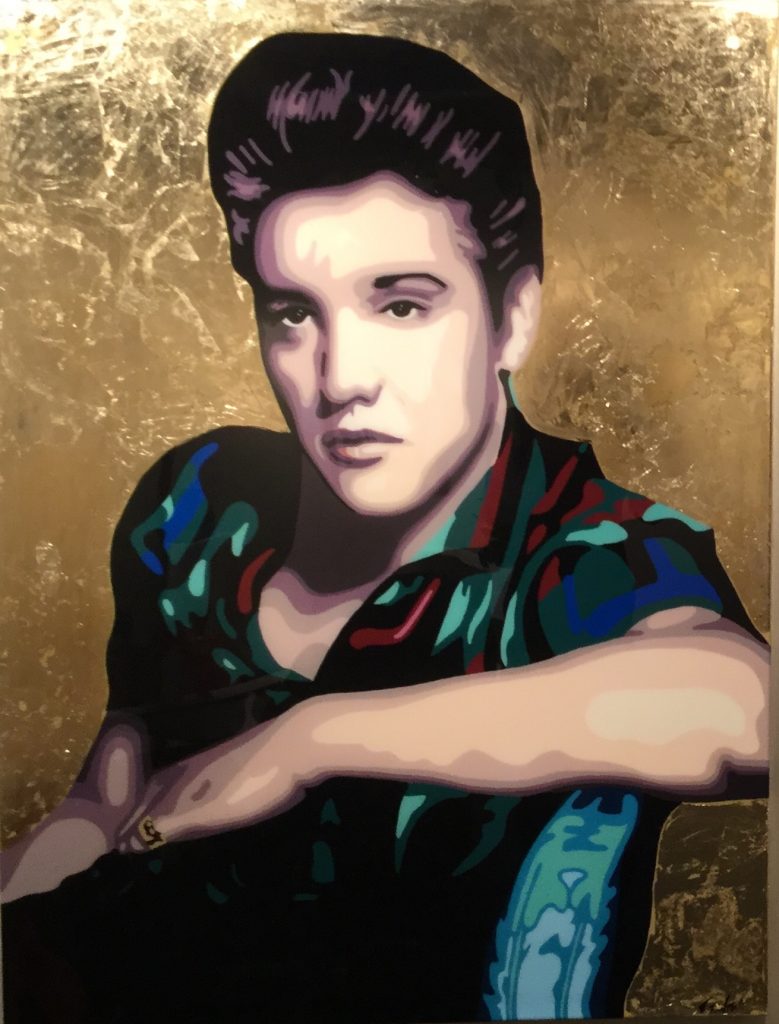
In my latest work I was stimulated by some of the world’s greatest artists of yesterday and today. Recreating famous portraits, my images are frequently influenced by the pop culture of the 1950s. Perceived in a distinct manner by each being and possessing a powerful emotive quality, color is at the heart of my work. I choose to fill each one of my canvases with carefully orchestrated shades and tints creating images that leave a soothing sense of pleasure to the observer. It is in our capacity to distinguish and to differentiate images that allows beauty to subsist. The definition of beauty is shattered by society and is reborn in art.

BROUILLETTE, diane

Diane Brouillette was born in Valleyfield in 1960 and has gained a strong background in art. She holds a Bachelor of Fine Arts (1985), she studied printmaking in Grenoble (France) and received a scholarship from the Canada Council for the Arts (1989) in order to perfect her techniques at the Academy of Fine – Florence Arts in Italy. Her works are found in many private and public collections.

Diane Brouillette painted and exhibited professionally for almost 30 years. She is recognized – beyond our borders for her still lifes executed with a realism so special that her subjects vibrate and come alive. In recent years, the artist, unleashing the power of her imagination, gives new life to her iconography. Her characters, lonely, frozen on the canvas, emerge from a world entrenched in the dream, the unconscious and the intimate. Only the hands and faces are highlighted. As her still lifes, her new paintings are executed with the same refined sense of detail and the same richness of matter and light. Diane Brouillette is revealed and yet her characters keep their secrets, behind a mask, their hands or lowered eyelids. Is it this paradox that captivates  the audience in search of an answer?

Ref: press release
Annie Reynaud 2013/11